
How a Protective Certificate can give you breathing space and protect you from creditors while exploring a debt solution in Ireland.
If you are experiencing financial difficulty, a Protective Certificate (PC) could give you the breathing space needed while you explore a formal debt or insolvency solution. This article explains what a Protective Certificate is, how it works, and answers frequently asked questions to help you understand the process.
What is a Protective Certificate?
A Protective Certificate (PC) is a court-backed protection that temporarily stops creditors from taking action against you while a debt or insolvency solution is being arranged.
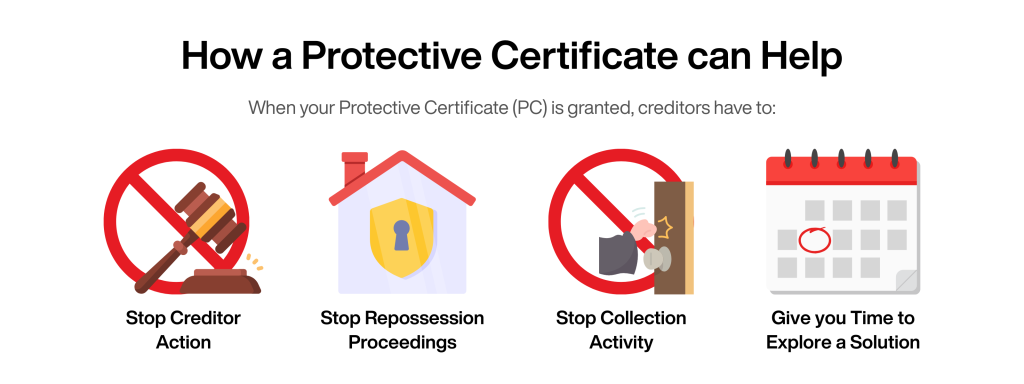
It is designed to give you time to:
- Review your financial situation with a Personal Insolvency Practitioner (PIP)
- Prepare and submit an insolvency solution, such as a Personal Insolvency Arrangement (PIA) or a Debt Settlement Arrangement (DSA)
When your PC is granted, creditors must:
- Halt any legal action or repossession proceedings
- Halt any actions towards obtaining a judgment on your property
- Stop all collection activity
- Not contact you directly—they must deal with your PIP
Creditors must continue these restrictions while the Protective Certificate is in place.
How Does a Protective Certificate Work?
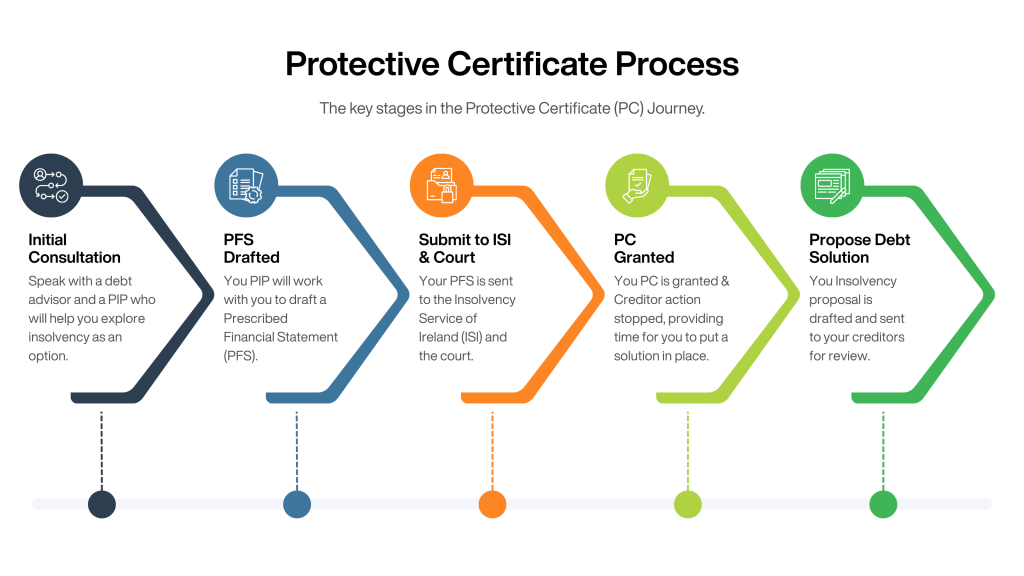
Your PIP plays an essential role in obtaining a PC. The process includes:
- Preparing a Prescribed Financial Statement (PFS):
This document summarises your financial situation, including income, assets, liabilities, and the options available to you. - Submitting the PFS:
Your PIP submits the PFS to the Insolvency Service of Ireland (ISI) and the court. - Court Consideration:
The court may grant the Protective Certificate, which provides immediate protection from creditor action for a limited period.
How Long Does a Protective Certificate Last?
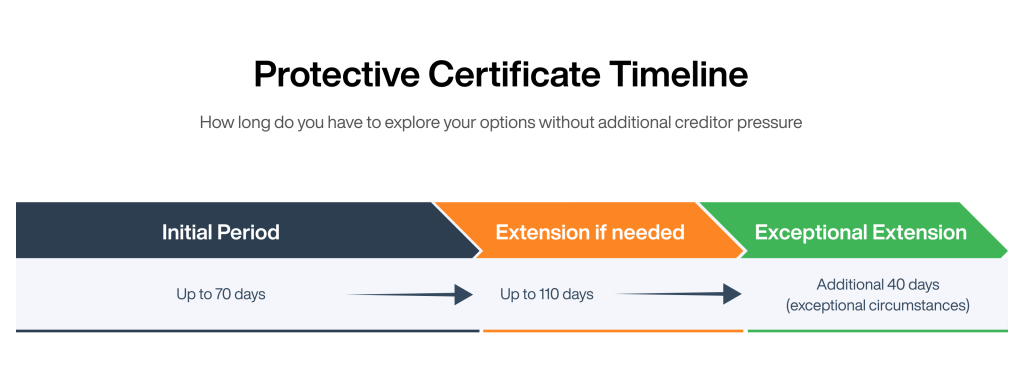
- A PC is usually granted for an initial period of 70 days
- It can be extended to a maximum of 110 days if necessary
- In exceptional cases, the PC may be extended for a further 40 days beyond the first extension
This timeframe gives you the opportunity to explore and propose your chosen insolvency solution without additional creditor pressure.
Why is a Protective Certificate Important?
A Protective Certificate can:
- Reduce stress by stopping creditor action
- Give you time to explore all options with your PIP
- Provide the space needed to apply for and negotiate your solution with creditors
Protective Certificate FAQ
Some common Questions we receive about a PC in Ireland.
1. Who can apply for a Protective Certificate?
Anyone experiencing financial difficulty who is seeking a formal debt or insolvency solution, such as a PIA or DSA, can apply. Applications must be made through a Personal Insolvency Practitioner (PIP).
2. Does a Protective Certificate stop all my debts?
No. A PC temporarily stops creditor action while your application is being processed. Once a formal solution is agreed, it will define how each debt is dealt with.
3. Will my creditors know I have applied for a Protective Certificate?
Yes. Creditors are notified through the court process, which is part of how the PC protects you from further action.
4. Can my Protective Certificate be extended?
Yes. In some cases, it may be possible to extend a PC for up to 40 additional days beyond the initial period.
5. How do I start the process?
Speak with a PIP or Debt Advisor. They will assess your financial situation to determine if you are insolvent and help you take the necessary steps towards obtaining a PC and proposing a solution to your creditors.
6. How long does it take to get a PC in place?
The time it takes to obtain a Protective Certificate can vary depending on your personal circumstances, the complexity of your financial situation, and how quickly you provide all relevant documentation. The sooner you submit the required documents, the quicker your PIP can act.
Typically, once your Prescribed Financial Statement (PFS) is prepared and submitted by your Personal Insolvency Practitioner (PIP) to the Insolvency Service of Ireland (ISI) and the court, a Protective Certificate can be granted within a few days to a few weeks. Early preparation and accurate information from you can help speed up the process.
7. How much does it cost to put all this in place?
At McCambridge Duffy, we do not charge any upfront fees. We carry out much of the work prior to a solution being accepted, such as drafting your PFS, obtaining your Protective Certificate, and submitting and negotiating your proposal with creditors.
If your proposal is not accepted by creditors, we charge nothing for the work done.
Only if your solution is accepted by creditors do we charge fees for the setup and management of your solution. Fees are fully discussed with you before you agree to anything and are built into your agreed affordable repayments, so you never receive an additional bill from us.
Next Steps
If you are concerned about your financial situation, seeking early guidance from a Personal Insolvency Practitioner or Debt Advisor could make a real difference. They can help you explore all your options, protect your rights, and work towards a sustainable solution that suits your circumstances.
